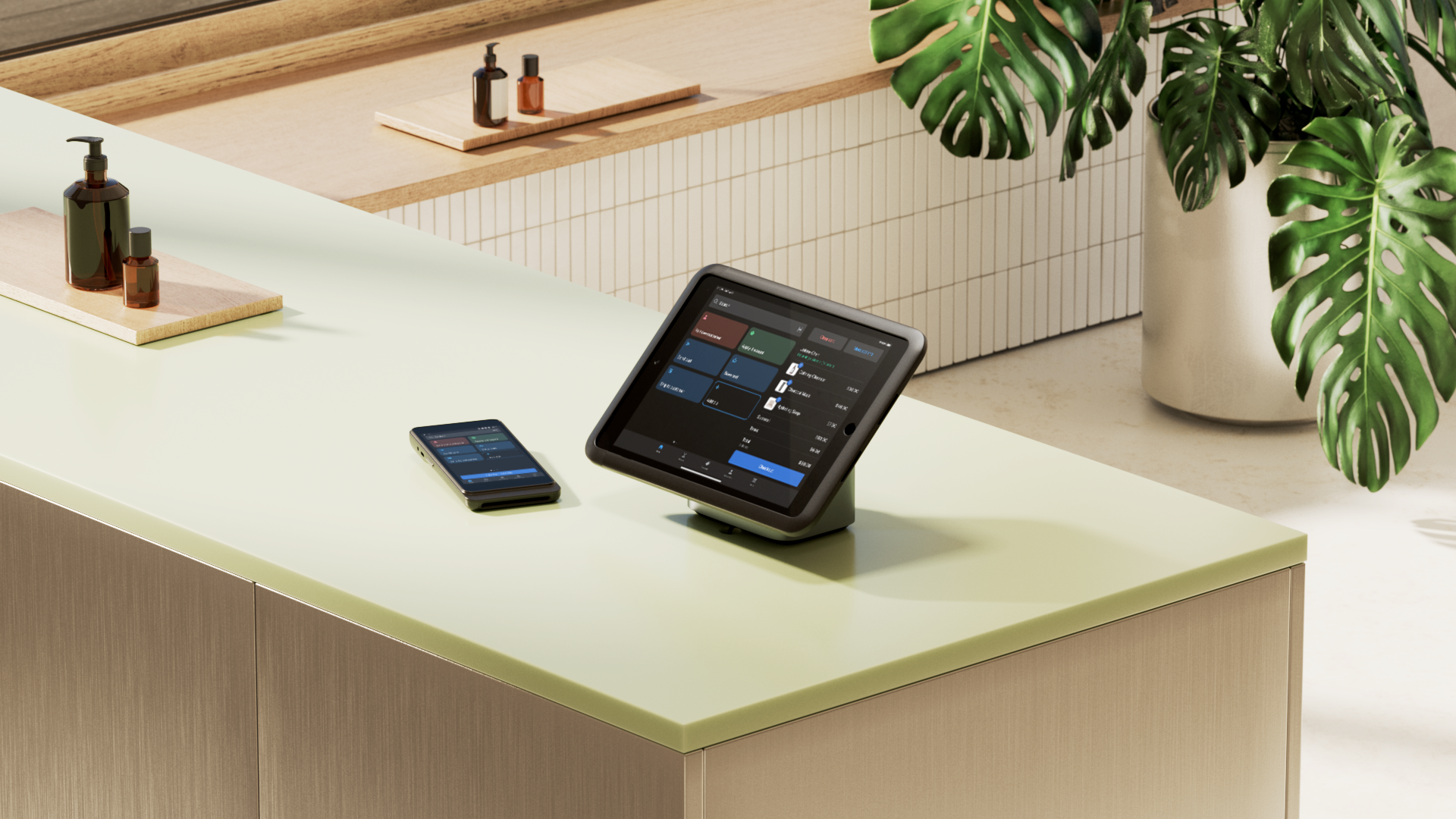
Shopify lets you sell to wholesale buyers and consumers from one platform, with pricing and payment terms tailored to each business customer.
In 2025, Shopify’s B2B gross merchandise volume (GMV) increased by 96%. As B2B sales grow, manually checking prices and payment deadlines can create extra work with every order. Company profiles and catalogs apply those settings when buyers shop.
B2B features are available on the Basic, Grow, Advanced, and Plus plans, with specific limits according to plan. Choosing the right plan depends on the needs of your B2B operation. This guide explains which Shopify plan fits your wholesale needs and whether to run B2B and direct-to-consumer (DTC) sales in one store or separate stores.
What is B2B on Shopify?
B2B on Shopify is a set of built-in tools for selling to other businesses, such as retailers buying stock for resale. Company profiles, catalogs, and payment terms are tools used to control how those buyers order and pay. Additional B2B features are available on Basic, Grow, Advanced, and Plus, with availability varying by plan.

What is included with B2B on Shopify?
These are the key features included with B2B on Shopify:
- Company profiles
- B2B catalogs and pricing
- Payment terms
- B2B checkout
- Customer accounts
- Powerful customization
- B2B analytics
Company profiles
Retailers can group each business customer’s contacts and locations in a company profile. Each location can have its own addresses, payment terms, and tax exemptions. Buyer permissions are used to determine who can place orders, view the location’s order history, and edit addresses.
To manage tax exemptions, use the tax settings for the relevant company location in your Shopify admin. Tax documentation requirements vary by jurisdiction. Required records, such as a resale certificate, vary by jurisdiction.

This information is for general guidance and does not constitute legal or tax advice. Consult a qualified professional about your business’s tax obligations.
B2B catalogs and pricing
Use B2B catalogs to control which products wholesale buyers can purchase and the prices they pay. Apply percentage adjustments across a catalog or set fixed prices for individual products and variants.

Basic, Grow, and Advanced allow up to three active catalogs across all B2B markets using Shopify Markets. Plus offers unlimited catalogs and direct assignments to specific companies or locations.
Australian fragrance label Who Is Elijah applied custom pricing across their eight expansion stores. Each region had its own catalog and price matrix, with wholesale revenue climbing 50% year over year.
“One of the reasons we needed custom pricing for our wholesale customers was that many of them fall into different B2B categories; some have hard margins, and some we can control,” says the brand’s technical leader, Brylee Lonesborough. “The custom catalog capabilities in B2B on Shopify meant we could set individual pricing categories and attach them to the various types of B2B customers we have, so they get a more personalized experience.”
Add quantity rules to set minimums, maximums, and purchase increments. These rules apply per variant, so buyers cannot combine different colors or sizes to meet a minimum. Volume pricing lowers the unit price when a buyer reaches a specified quantity for that variant.
Laird Superfood ditched phone-in wholesale orders in favor of a Shopify B2B portal. The switch saves $50,000 to $60,000 in labor each year, and wholesale now accounts for 75% of total sales, up from 25% before the move.
Payment terms
Assign net payment terms to company locations so their orders carry a set payment deadline. Buyers can view outstanding orders and submit payment through their accounts.
Configure payment reminders in Shopify Flow to email the company’s main contact when payment is due. Payment terms do not automatically charge a saved card when the deadline arrives.
Shopify Payments lets businesses accept credit and debit cards and save buyer payment details for future purchases. Eligible US stores can also accept ACH Direct Debit payments from customers with US bank accounts. On the Shopify Plus plan, you can collect a percentage deposit up front and set payment terms for the remaining balance.
B2B checkout
B2B checkout displays the buyer’s assigned pricing and payment terms, with company addresses filled in. Buyers and staff can also use these ordering tools:
- Repeat past purchases. Buyers can duplicate a previous order from their customer account, adding its items to the cart for another purchase.
- Add multiple variants. Quick-order lists let buyers enter quantities for several product variants on one page and add them to the cart together.
- Record purchase order numbers. Buyers can enter a purchase order (PO) number at checkout. Staff can also add one to an order or draft order in the admin, giving both teams a reference for matching purchasing records.
- Invoice draft orders. Create a draft order for an order received by phone or email, then send the buyer an invoice to complete payment.
- Review submitted orders. Configure a company location to submit checkout orders as drafts. Your team can review the order and confirm it before it’s accepted.
Customer accounts
Give buyers access by adding their customer records to a company location and activating customer accounts. Send an invitation or share the sign-in link. Buyers sign in with a one-time code sent to their email address.
Prospective wholesale customers can also submit account requests through Shopify Forms. A submission creates company, location, and customer records for your team to review before approving purchasing access.
Once signed in, buyers can select their company location and see its assigned products and prices. The B2B customer portal also gives them access to order tracking and payments, with permissions controlling the records and details they can manage.
Most business buyers prefer to purchase independently. Gartner’s 2026 findings show that 70% prefer a completely digital, self-service buying experience. At the same time, 69% prefer to validate AI-generated insights with a sales representative, suggesting a role for sales support alongside self-service tools.
Powerful customization
Customize the storefront wholesale buyers browse and the rules applied to their orders:
- Build a wholesale storefront. The Trade theme is designed for B2B stores. Its quick-order lists let buyers enter quantities across variants, and its pricing display can hide prices from visitors who have not signed in. Theme settings and Liquid code let you adjust layouts and content.
- Tailor the experience by market. On Advanced and Plus, Shopify Markets has contextual storefront and checkout customization. Different B2B customer groups can receive different store content and checkout experiences within the same store.
- Build a headless storefront. Developers can use Hydrogen, the Storefront API, and the Customer Account API to create a custom B2B storefront.
- Customize purchasing rules. Apps and Shopify Functions let you add discount logic and change the payment or delivery options buyers see. For example, a payment customization can hide a payment method for a particular customer group.
B2B analytics
Use B2B reporting filters to measure wholesale sales in Shopify Analytics. Filter by B2B order, then group results by company or company location to see which accounts generate the most net sales.
In a blended store, compare B2B and DTC sales for the same period in a single report. Save custom reports and add them to your analytics dashboard to track wholesale performance alongside consumer sales.
Which Shopify plan do you need for B2B?
You can sell B2B on Basic, Grow, Advanced, or Plus. All four plans offer company profiles, wholesale pricing, and self-service ordering. The plan differences concern catalog assignments, payment controls, and customization.
| B2B feature | Basic | Grow | Advanced | Plus |
|---|---|---|---|---|
| Companies, locations, and buyer permissions | Included | Included | Included | Included |
| Active catalogs across B2B markets | Up to three | Up to three | Up to three | Unlimited |
| Catalogs assigned directly to companies or locations | Unavailable | Unavailable | Unavailable | Included |
| Quantity rules and volume pricing | Included | Included | Included | Included |
| Net terms and payment reminders | Included | Included | Included | Included |
| Reorders, PO numbers, and draft-order workflows | Included | Included | Included | Included |
| Contextual storefront and checkout through Markets | Unavailable | Unavailable | Included | Included |
| Deposits, partial payments, and payment requests per fulfillment | Unavailable | Unavailable | Unavailable | Included |
Basic, Grow, and Advanced use Shopify Markets for B2B catalogs. Their three-catalog allowance applies across all B2B markets combined. Assigning three catalogs to one market uses the full allowance, leaving no capacity for additional catalog assignments elsewhere.
Basic or Grow work for a wholesale program in which customers share a limited set of product selections and price tiers. Both let buyers order in specified quantities and pay on net terms. Compare their other business features and fees to determine which plan fits your broader business needs.
Advanced adds market-specific storefront and checkout experiences. It can fit a business that wants different content for wholesale customer groups but can still work within the catalog limit. Moving to Advanced doesn’t increase the number of B2B catalogs.
Plus adds capabilities for businesses that negotiate separate product assortments or prices with individual companies. Direct catalog assignment applies those agreements to specific companies or locations. Its payment features also let you collect deposits, record partial payments, and request payment as individual shipments are fulfilled. For example, a distributor giving each retail chain its own negotiated assortment and prices would need Plus for direct company catalogs.
For businesses coming from the legacy Plus Wholesale Channel, native B2B is its replacement. Use the current customer migration and B2B setup guides to plan your move.
Before upgrading, look at your wholesale accounts. Count the catalogs you need, identify any company-specific pricing, and document when buyers must pay. Compare the subscription cost with the apps and manual work those features would replace.
One store or two: Blended vs. dedicated B2B stores
A blended store manages B2B and DTC sales through one Shopify admin. A dedicated B2B store operates separately from your consumer store, with its own admin and settings.
Shopify’s Q4 2025 Survey of Store Owners found that businesses selling to both B2B and B2C customers were significantly more likely to have scaled than B2B-only businesses.* Businesses selling to both customer groups can use either a blended or dedicated B2B setup.
| Area | Blended store | Dedicated B2B store |
|---|---|---|
| Admin | Manage consumer and wholesale orders in one admin. | Manage wholesale orders and settings in a separate admin. |
| Inventory | Both customer groups buy from shared inventory. Stock cannot be allocated by customer type. | Wholesale inventory is separate by default. Use an app or enterprise resource planning (ERP) integration to synchronize stock across stores. |
| Branding | Use one theme and shared brand assets, with different content where configured. | Set up a separate theme, navigation, and wholesale storefront design. |
| Apps and integrations | Install and configure apps for one store. | Configure integrations for each store and budget for separate app charges and paid theme licenses. |
| Buyer access | Consumers browse the public store. Authorized wholesale buyers sign in to access their assigned products and prices. | Restrict the storefront to approved B2B buyers if you want a private wholesale site. |
| Customization | Apply conditions to target wholesale content and purchasing rules to B2B customers. | Store-wide changes apply to the wholesale operation. |
A blended store can work for businesses where one team sells shared stock under the same brand. A dedicated store can fit businesses with separate wholesale teams, inventory allocations, or a private buying portal.
Both options can use Basic, Grow, Advanced, or Plus. A separate store on a non-Plus plan needs its own subscription. Businesses on Plus can use an eligible B2B expansion store under their existing contract, although each store still has separate data, settings, and app charges.
The catalog and payment limits of your plan apply to either setup. Advanced or Plus is needed for contextual storefront and checkout customization through Shopify Markets. Creating a dedicated store does not unlock those features on Basic or Grow.
Tella & Stella worked with Novatize to build a wholesale portal on a dedicated B2B domain. Retailers could request an account and receive approval before gaining access to negotiated prices and wholesale ordering tools. After unifying their commerce operations on Shopify, the brand recorded a 23% year-over-year increase in total sales across channels.
Decide how your team will manage stock, buyer access, and integrations before building. Switching store types later means redoing much of the company setup, catalog configuration, and storefront customization. Your store setup also affects how B2B data and workflows connect with your existing systems.
Connect B2B on Shopify to your ERP and existing systems
Shopify Flow automates routine tasks in your store and across compatible apps. Use templates or create workflows with triggers, conditions, and actions. For example, a B2B workflow can send order invoices to both the buyer and their accounting contact.
Shopify’s Global ERP Program also offers prebuilt enterprise resource planning (ERP) connectors in the Shopify App Store, including integrations with NetSuite, Acumatica, and Brightpearl. These apps synchronize commerce data between Shopify and your ERP. For example, the NetSuite connector can send Shopify orders to NetSuite and return inventory and fulfillment updates to your store.
For Snyder Performance Engineering, connecting their wholesale operations reduced manual order processing. “My team doesn't have to wait for an order to get manually plugged in. By the time somebody places an order, it can literally be packed and shipped within a couple minutes. That's big in wholesale,” says Amy Snyder, cofounder and COO.
For systems or workflows that need a custom connection, use an integration platform or build through Shopify’s APIs. Check the available B2B integrations to see which records each connector synchronizes and in which direction.
Confirm that your connector maps companies, company locations, catalogs, and payment terms correctly. Specify which system controls each record, then test a wholesale order through payment and fulfillment before enabling the integration for all customers.
Custom B2B builds: APIs, headless, and when to bring in a developer
When built-in features and existing integrations don't support a B2B workflow, a developer can build a custom ERP connection or an ordering interface for complex product configurations. Define the buyer’s task and the data involved so the developer can assess whether to extend your current store or build a custom storefront.
Shopify offers several options for custom B2B development:
- Automate data and order workflows. B2B APIs let developers create companies, catalogs, and draft orders through custom apps. An integration can use these APIs to create Shopify records from information already stored in your business systems.
- Build a headless storefront. Developers can use Hydrogen, the Storefront API, and the Customer Account API to build a custom buying experience. Buyers sign in, select their company location, and receive the products, prices, and quantity rules assigned to that location.
- Extend the buyer portal. Customer account extensions add custom pages, content, and order actions to customer accounts. For example, a business could add an order-specific page for buyers to retrieve documents associated with their purchase.
Use the Shopify Partner Directory to find developers with B2B, systems integration, or headless commerce experience. Share your workflow and a sample order, then ask for a scope that identifies the development work, plan requirements, and ongoing maintenance.
Where to start with B2B on Shopify
Confirm that your plan covers the catalogs, payment options, and customization you need. Use a blended store for shared inventory and administration, or a dedicated store for a separate wholesale operation.
Follow the B2B setup checklist to create company records, configure catalogs, and assign payment terms. Place a test order as a wholesale buyer and check the assigned prices, tax settings, and payment deadline before inviting customers. For additional launch and customization guidance, follow the B2B on Shopify learning path in Shopify Academy.
*Based on a 2025 survey of 500 Shopify merchants conducted in English across Australia, Canada, the United Kingdom, Ireland, New Zealand, and the United States. Respondents were established merchants with more than two years on the platform. Results reflect the experiences of this specific sample and may not be representative of all merchants.
Read more
- B2B Ecommerce: Everything You Need to Know to Get Started
- B2B Ecommerce: Why Taking Your B2B Business Online is a Smart Strategy to Scale
- 12 B2B Ecommerce Trends To Shape Your Business in 2023
- What Is Wholesale B2B and How To Sell To Customers in 2023
- What Are B2B Payments? Methods & Processing Systems
- B2B Marketplaces: What They Are, How to Succeed, and 8 Marketplaces to Consider
- Find the perfect domain name
- Website Builder 2024: Create a Website in Minutes
- B2B Sales Funnel: How to Identify Which Stage Your Buyer is In and Convert Them into Customers—Fast
B2B on Shopify FAQ
Can you do B2B on Shopify?
Shopify B2B features are available on Basic, Grow, Advanced, and Plus. You can set up company accounts, wholesale catalogs, quantity rules, payment terms, and customer accounts. Plus adds capabilities such as catalogs assigned directly to individual companies.
How much does Shopify B2B cost?
B2B features are included in the Shopify plan you choose. US pricing starts at $29/month for Basic, $79 for Grow, and $299 for Advanced when billed yearly. Plus starts at $2,300/month. Payment processing, paid apps, and a separate store can increase the total cost.
Can you sell wholesale and direct from the same store?
A blended store serves wholesale and direct customers through one storefront and admin, with shared inventory. Wholesale buyers sign in to see their assigned products and prices. You can also run B2B from a separate, dedicated store.
Which ERP providers integrate with B2B on Shopify?
Shopify’s Global ERP Program includes integrations for Oracle NetSuite, Microsoft Dynamics 365 Business Central, Infor, Acumatica, and Brightpearl. Check each connector’s B2B data support before choosing one: the records it synchronizes and the direction of each sync vary.
What can B2B customers do in their accounts?
After you add a buyer to a company location, they can sign in with an emailed code. Their customer account lets them view company details and order history, track orders, reorder, make payments, and request returns. Buyers assigned to multiple locations can select the location they’re purchasing for.